
The Objects Between Us and Technology
There is a paradox at the heart of contemporary technology. The more advanced our devices become, the less they seem to belong to the environments they inhabit.

The first television sold commercially was the mechanical Baird Televisor, introduced in the United Kingdom in 1928. Retailing for between £40 and £150, it relied on a spinning Nipkow disc and a neon lamp to produce a low-resolution image barely larger than a postage stamp. What began as a fragile technological curiosity would go on to become one of the most influential objects of the twentieth century.
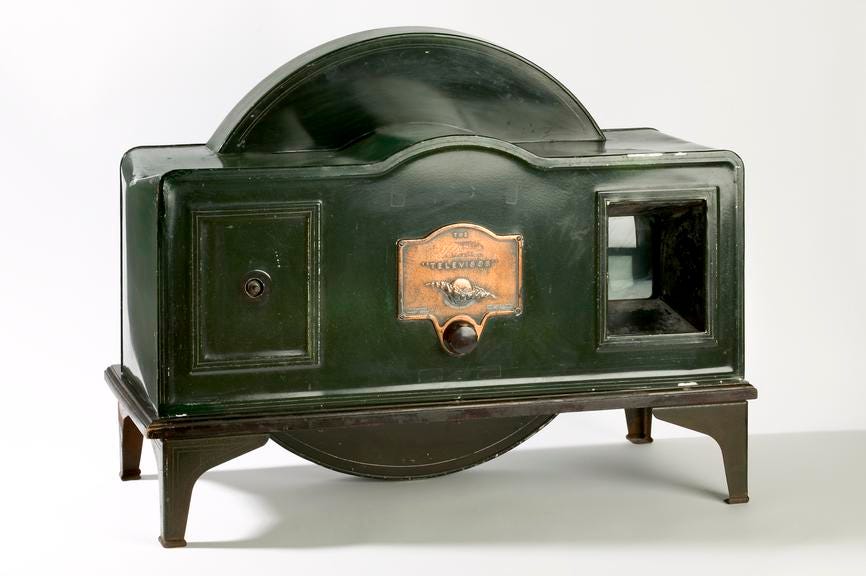
Today, amid streaming platforms, endless feeds, and a twenty-four-hour ocean of content, visual media is almost impossible to escape. Screens accompany us from morning to night, embedded within every aspect of daily life. Yet the television was not always the invisible portal it is today. It was once a piece of furniture, a machine, a status symbol, and a carefully designed object within the home.
As television technology evolved, so too did its physical form. Early sets were housed within ornate wooden cabinets that concealed their complex mechanics and allowed them to blend into domestic interiors. By the postwar years, televisions had become the focal point of the living room, often occupying large furniture like enclosures designed to signal both modernity and prosperity. Over the following decades, cabinets shrank, screens grew, and technological innovation gradually liberated the television from its furniture casing.
From polished timber consoles to plastic shells, from bulky cathode ray tubes to ultra-thin displays mounted directly onto walls, the television’s transformation reflects changing relationships between technology, design, and domestic life. As screens have become increasingly dematerialised, their presence has only grown more pervasive. The question is no longer how we gather around the television, but how the television, and the countless screens that followed it, came to surround us.
Televisions were so carefully designed during the mid-twentieth century because they were not yet seen primarily as electronics. They were seen as furniture.
In the 1940s, 1950s, and early 1960s, a television was often the most expensive object a family owned after their home and automobile. It occupied a prominent place in the living room, a space traditionally furnished with cabinets, sideboards, and display furniture. Manufacturers, therefore, needed televisions to harmonize with domestic interiors rather than appear as industrial machines.
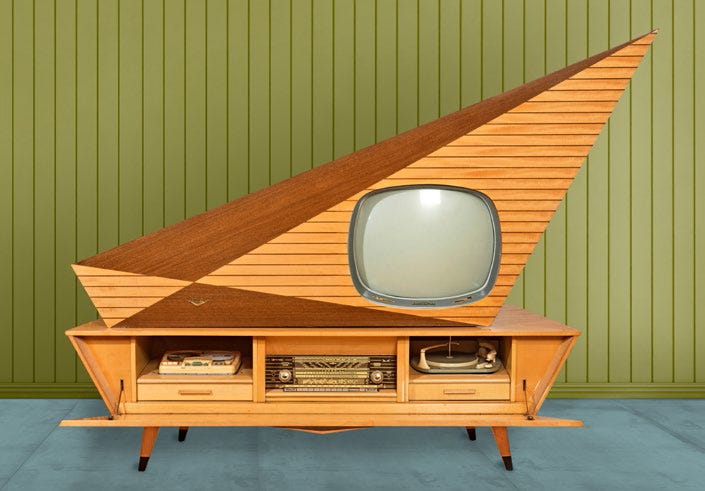
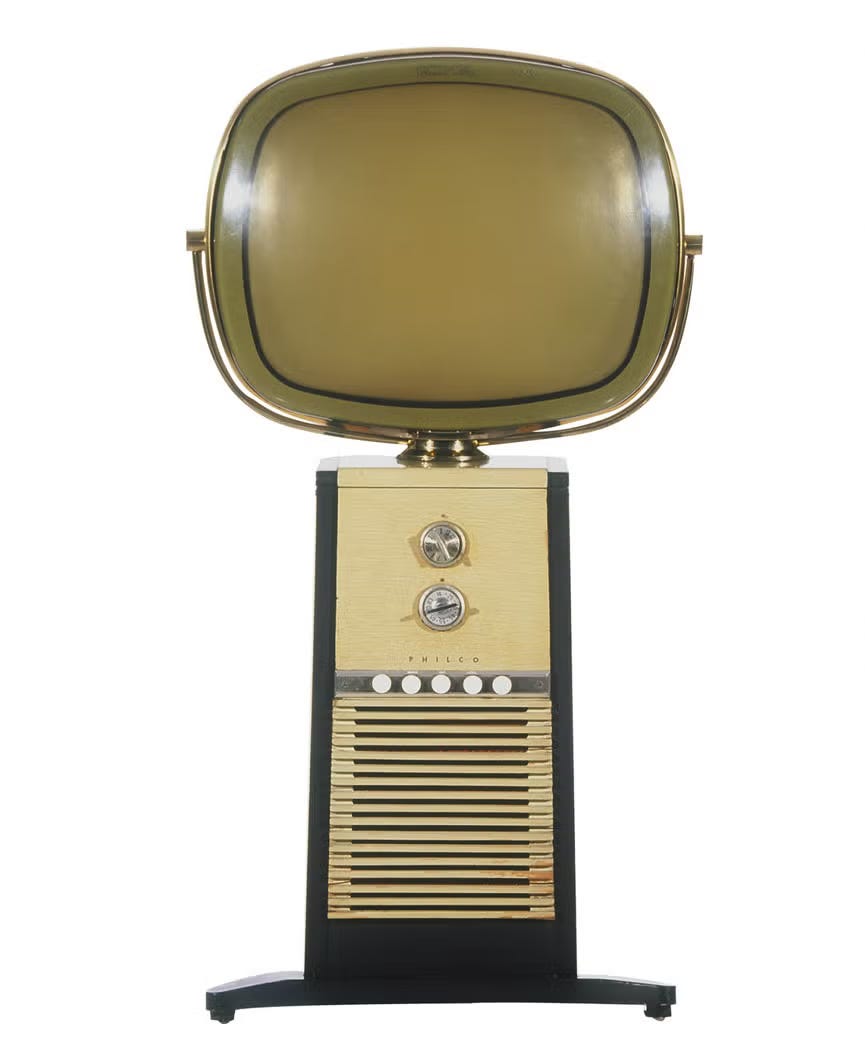
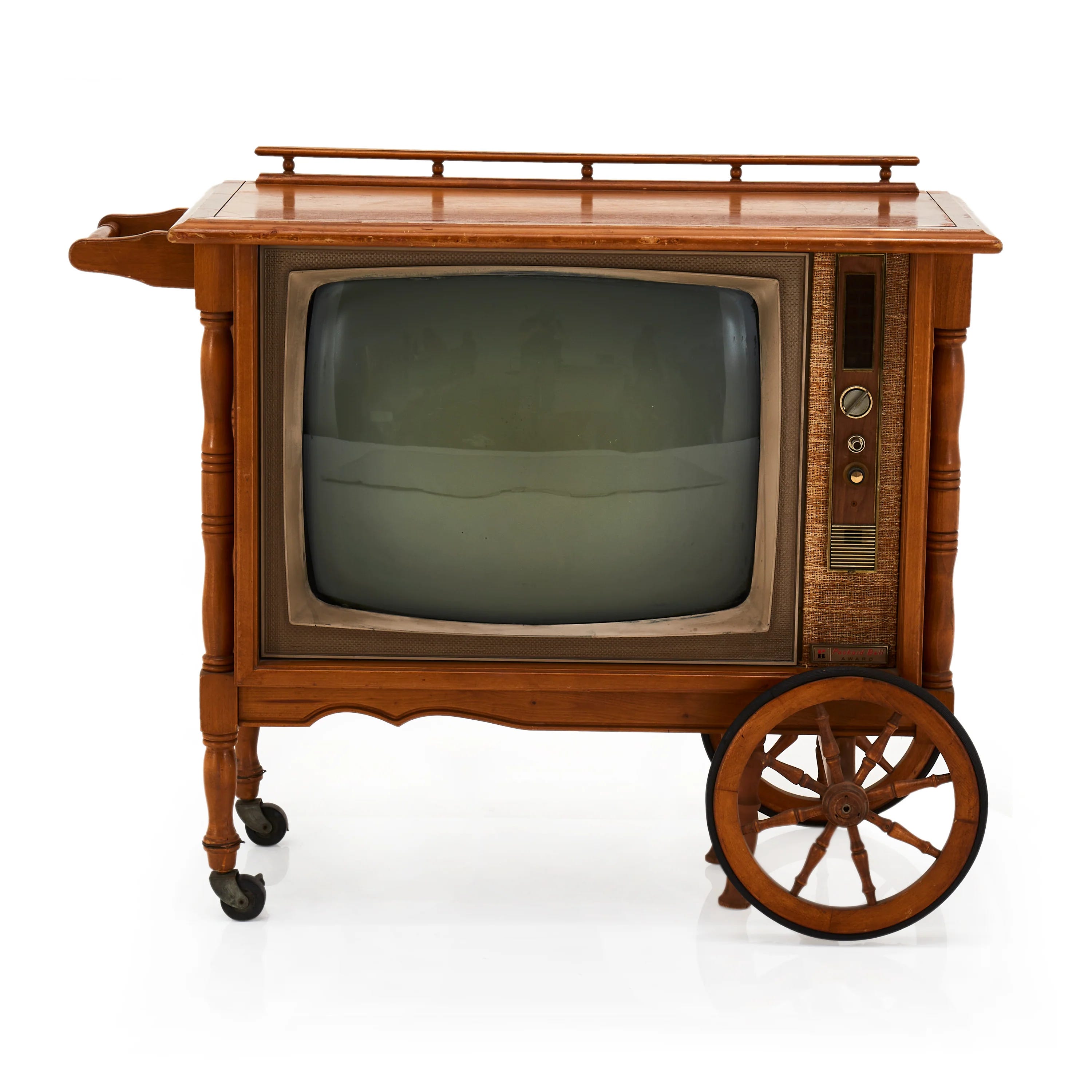
Many early sets were housed in finely crafted wooden cabinets made from walnut, mahogany, oak, or teak veneers. Doors concealed the screen when not in use, allowing the object to function as a cabinet first and a television second. Some models incorporated radios, record players, and storage, creating multifunctional entertainment centers that reflected the era’s ideals of domestic comfort and prosperity.
The period also coincided with the rise of industrial design as a profession. Designers such as John Vassos, Raymond Loewy, Henry Dreyfuss, and Dieter Rams helped companies understand that the appearance of a product could be as important as its technology.

Contemporary televisions have become increasingly dematerialized. As screens grew thinner and electronics shrank, the cabinet disappeared. Design attention shifted away from the object itself and toward the image on the screen. The television evolved from a crafted piece of furniture into a nearly invisible portal for content.
This is what makes mid-century television cabinets so compelling today. They belong to a moment when technology still required a physical presence in the home, and when designers treated that presence with the same care given to a dining table, a bookshelf, or an heirloom cabinet. The object was expected to contribute to the character of the room, not disappear into it.
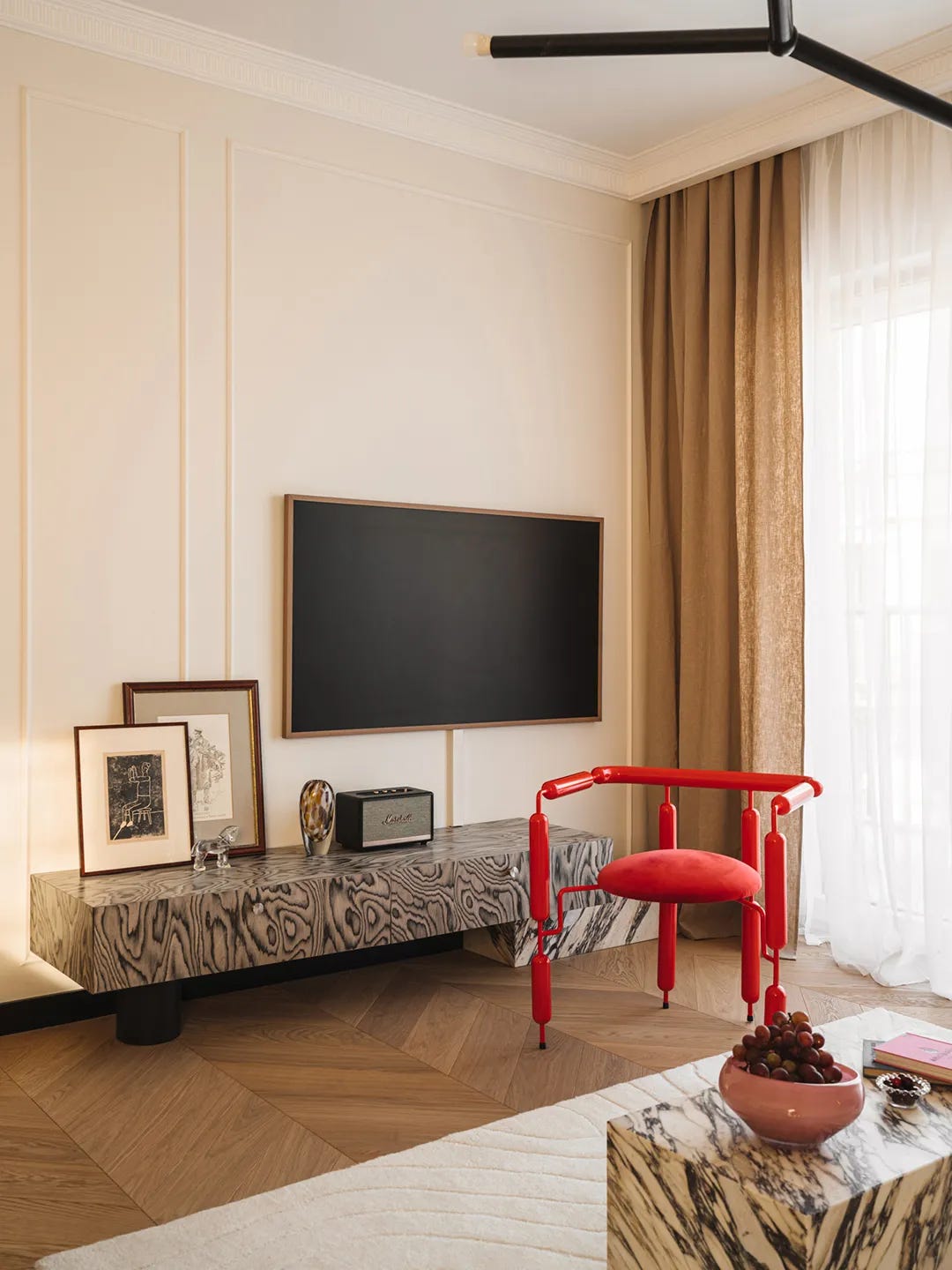
Pedestal is not really a company that makes TV stands. It is a company that questions why a TV stand should exist at all.
For decades, screens have quietly reshaped our homes. They have become larger, smarter, and more central to our daily lives. We gather around them, work through them, learn from them, and escape into them. Yet the objects that support these screens have largely remained invisible, designed as afterthoughts, hiding in the background while technology takes center stage.
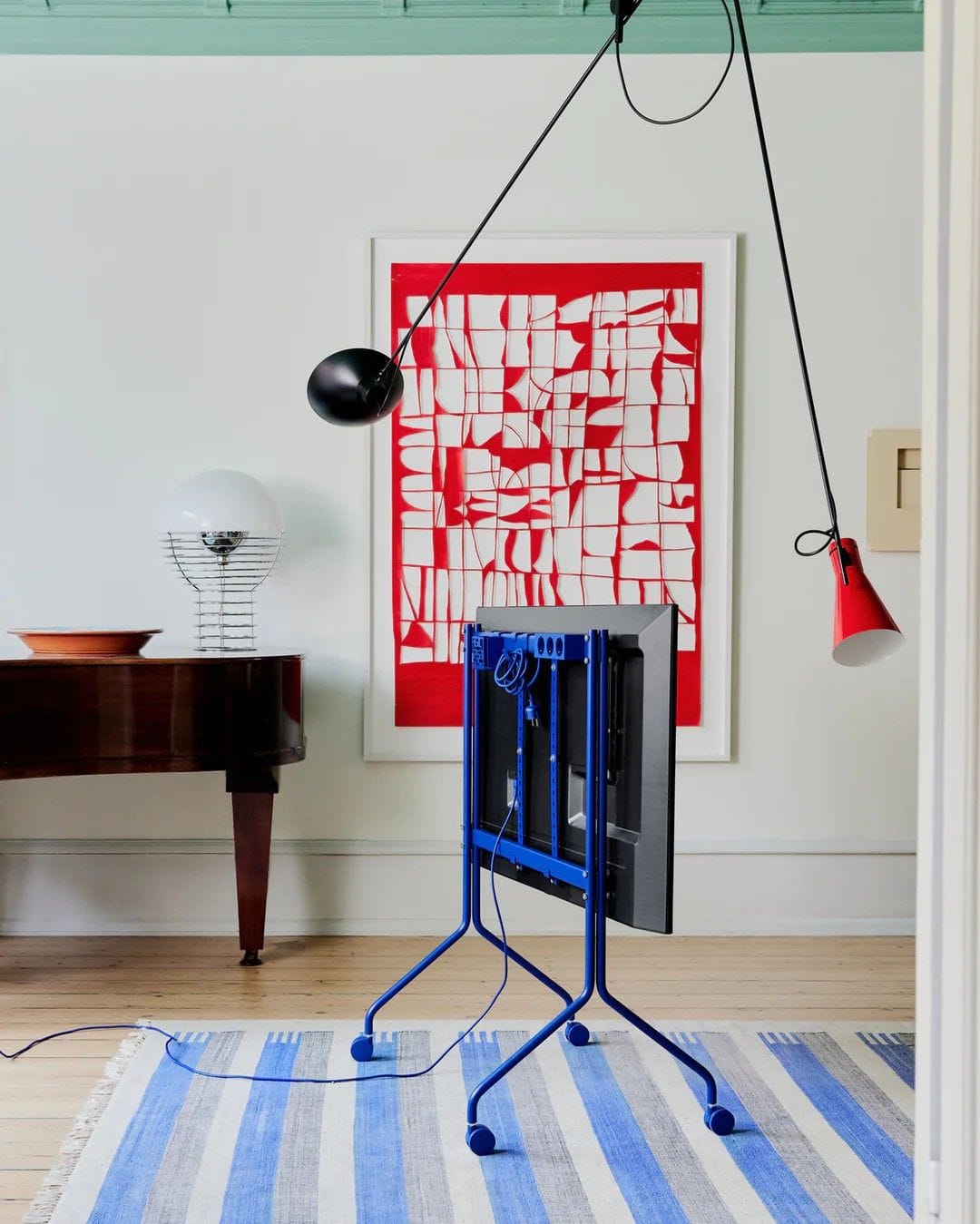
Rather than treating the TV stand as a technical accessory, the Danish brand approached it as a piece of furniture. An object with its own presence, character, and purpose within a space. One that could contribute to the atmosphere of a room rather than simply serve it.
Rooted in Scandinavian design traditions, Pedestal creates stands that balance form and function with equal importance. Clean lines, bold silhouettes, carefully chosen materials, and thoughtful mobility transform a practical necessity into a design statement.
Their ambition is to elevate the relationship between technology, furniture, and interior architecture. Each piece is designed to create flexibility, encourage new ways of arranging space, and bring a greater sense of intention to everyday environments.
At its core, Pedestal is exploring how design can shape the way we live with the objects around us, turning a humble TV stand into a considered part of contemporary living.
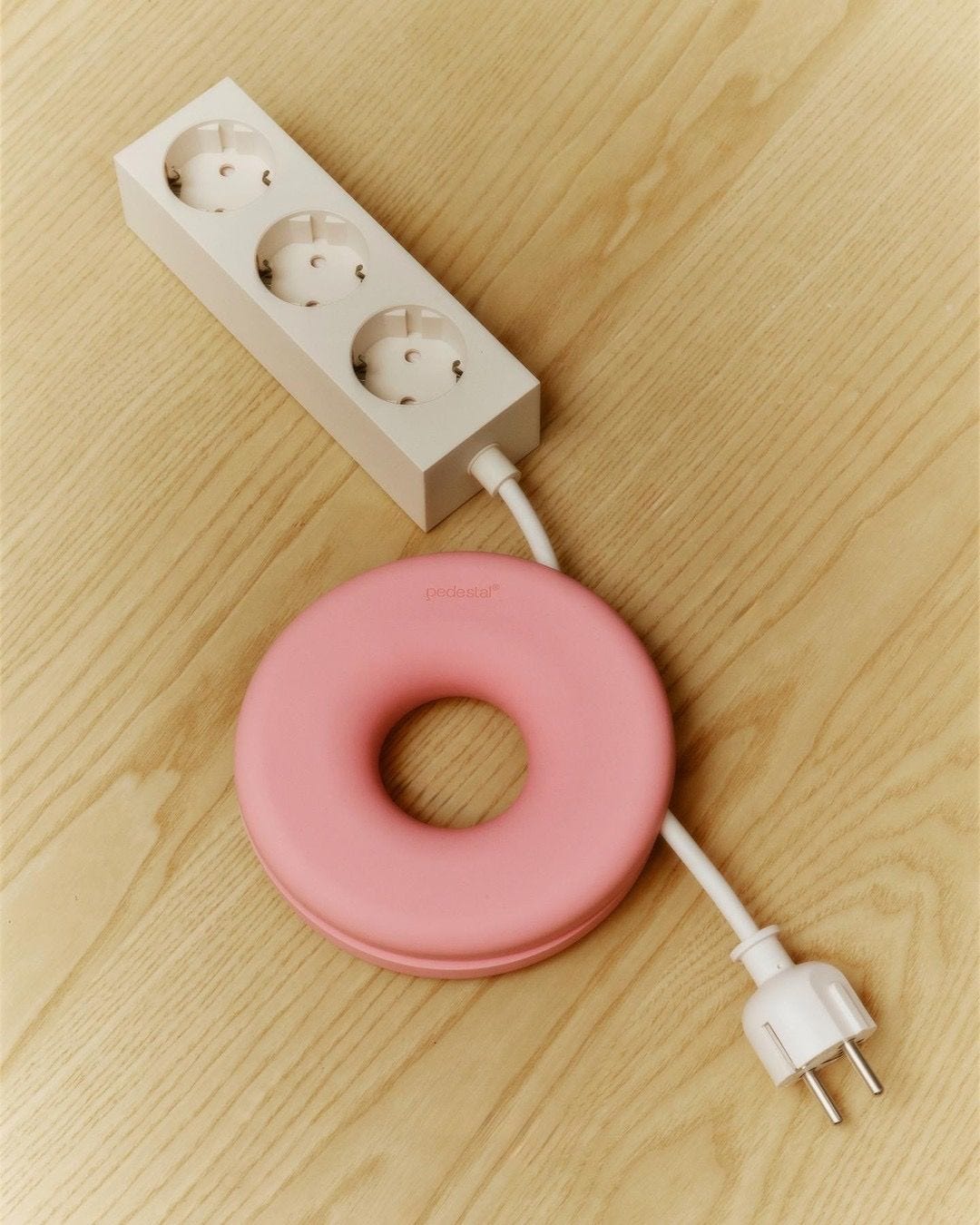
There is a paradox at the heart of contemporary technology. The more advanced our devices become, the less they seem to belong to the environments they inhabit.
We celebrate innovation, intelligence, and connectivity, yet rarely question the physical presence of the objects that deliver these capabilities. Technology has become increasingly invisible in function, while remaining remarkably visible in form.
Much of today’s technological landscape is shaped by engineering logic. Efficiency dictates geometry. Manufacturing dictates materials. Optimization dictates appearance. The result is a world populated by standardized black boxes, smooth rectangles, and anonymous cylinders. These objects are designed to perform, not necessarily to belong.
This raises a larger question: why do we continue to accept that technological objects should look technological?


The visual language of technology has become so normalized that we rarely challenge it. We accept routers, speakers, charging docks, sensors, and smart devices as foreign bodies within domestic space. They arrive with their own aesthetic rules, often disconnected from the cultural, emotional, and material qualities that make a house feel like a home. In doing so, technology quietly imposes its values onto our environments.
The problem is not simply one of appearance. It is one of hierarchy. Technology has long assumed a dominant role in the design process, while the home adapts around it. Furniture is rearranged for screens. Walls are modified for devices. Objects are purchased to conceal cables. Entire interiors become support systems for technologies that were never designed with those interiors in mind.
Perhaps the challenge is not to design better technology, but to question the authority technology has acquired over our spaces.
For decades, progress has been measured through technical advancement. Faster processors, stronger connectivity, greater computational power. Yet very little attention has been given to how these developments reshape the emotional and spatial experience of everyday life. A device can be technically sophisticated while contributing very little to the quality of the environment in which it exists.
This is where design becomes more than a styling exercise. Design has the capacity to mediate between technological necessity and human experience. It asks different questions. Not what a device can do, but how it should live among us? What relationships does it create? What atmosphere does it contribute to? What values does it communicate?
The emergence of companies that successfully merge technology and design signals a growing awareness that performance alone is no longer enough. Yet even these examples often focus on improving the device itself. The more radical opportunity may lie elsewhere, in the ecosystems that surround technology.
What if the future of technology is not defined by the device, but by the objects that support it? What if furniture, textiles, architectural surfaces, and everyday materials become active participants in shaping how technology is experienced? Rather than endlessly redesigning the black box, perhaps we should redesign its relationship to the home.
This perspective shifts attention away from the device as the center of innovation. It recognizes that technology is only one component within a larger material and cultural landscape.
The home is not a platform for technology. Technology is a guest within the home.
As our environments become increasingly connected, the question is no longer whether technology can integrate into everyday life. It already has. The more pressing question is whether it can do so without diminishing the qualities that make domestic spaces meaningful. If technology and design are to move forward together, the goal should not be seamless integration alone. It should be the creation of environments where technological progress enhances, rather than dictates, the experience of being human.